

Emirates Natural History Group (Abu Dhabi Chapter)
Powered by
Past events
All events
Past events
Mar
08
2021
Past Event
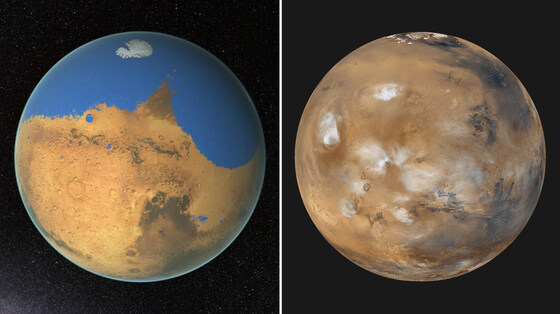
ENHG Lecture March 8: Why explore Mars? With Dr. Dimitra Atri
07:00 PM – 09:00 PM
++Kindly note that this lecture will take place over Zoom. It will start at 7:30, however you are welcome to sign in as of 7:00 for an informal chat with fellow members from around the Emirates. A link will be sent out prior to the lecture. We look forward to welcoming you!++
About the Talk: February 9, 2021 has gone down in history as the day the UAE’s first interplanetary mission – and the first from the Arab world – succeeded, when the Hope probe entered the Martian orbit. With a spectacular launch on July 20 from Tanegashima Space Center in Japan, it took 204 days to cover the 493 million km journey to reach the orbit of Mars. For a country founded only in 1971 and with a relatively small population of 10 million, it is an extraordinary achievement. Dr. Atri will share his views of the significance of this achievement and the scientific benefits of Mars exploration. He will then discuss plans of establishing a human presence on Mars by spacefaring nations, and their implications for environmental sustainability on Earth.
About the Speaker: Dimitra Atri is an Astrophysicist at the NYU Abu Dhabi Center for Space Science, where he leads the Mars Research Group along with Prof. K.R. Sreenivasan. The overarching theme of his research is investigating the astrophysical conditions that are responsible for carving out habitable conditions on planets in the Solar system (especially Mars) and beyond (extra-solar planets or exoplanets). Using a combination of space mission data and numerical models, he studies how solar and stellar activity impacts planets around them and their potential to host life. Our planetary neighbor, Mars was very Earth-like in the past with, abundant liquid water on its surface, and could have hosted life. He is investigating how Mars lost most of its atmosphere and water, whether ancient Mars hosted life, and if there is life below the surface of the planet. He is using NASA’s MAVEN mission and plans to use UAE’s Hope mission data to answer the former, and NASA’s Curiosity and Perseverance data to answer the latter questions. He is also interested in human space exploration, and is investigating how radiation in outer space impacts astronauts in long-term space missions, especially for future crewed missions to Mars, and developing strategies to sustainably explore the Moon and Mars in the coming decades. Before working at NYU Abu Dhabi, he was a Research Scientist at the Blue Marble Space Institute in Seattle (USA) and a Visiting Scientist at the Tata Institute of Fundamental Research in Mumbai (India). He earned his PhD in Physics from the University of Kansas (USA). He is a lead author of numerous publications in international peer-reviewed scientific journals. He regularly serves on committees of NASA and NSF, and referees for major astrophysics, planetary science, and astrobiology journals.
Mar
02
2021
Past Event
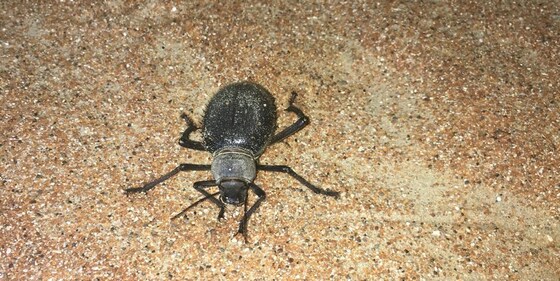
ENHG Lecture March 2: "Seeker of Dark Places" – Beetles belonging to the Family Tenebrionidae, with Dr. Brigitte Howard
07:00 PM – 09:00 PM
Note: the lecture will be given over Zoom, and a link emailed to all those registered prior to the event. You are welcome to log in as of 7:00 pm for a half hour of casual talk with your fellow members. The lecture will begin at 7:30.
About the Talk: It is almost impossible to go on a field excursion and not see at least one species of the beetles belonging to the the Tenebrionidae, commonly known as darkling beetles. By no means am I an expert in this beetle group, however, I have studied insect diversity of terrestrial desert environments for some years now, of which darkling beetles form a large part. During this talk I will first introduce how darkling beetles fit into the overall beetle order, some specific ways to tell them apart from other beetles, focus on some of the key species found in the UAE, and discuss some aspects of their ecology.
About the Speaker: Dr. Brigitte Howarth (Associate Professor) is an ecologist with extensive experience in desert ecology. Her first degree was in Applied Ecology (BSc (Hons)), and her PhD was in ecological entomology. Over the past few years at Zayed University (Dubai, UAE) she has shared her time between the Center for Educational Innovation (CEI) and her home unit, which was within the College of Natural and Health Sciences, Department of Life and Environmental Science. In that department, she was an Associate Professor, delivering courses in biology and ecology. Much of her teaching was dominated by teaching methods that would bring the classroom to life, and as such she has always been a keen advocate of facilitated learning and skills sets that build habits of mind, developing life-long learning. Her role at ZU has prepared her well for her new challenge as Director of Institutional Effectiveness at the American University in Dubai, which she joined in January of this year.
With more than 21 years spent in the UAE, Brigitte has a good understanding of the local species biodiversity, and researches the insects of the various terrestrial habitats. Her interests have expanded to researching how land use change and development are impacting species biodiversity in the UAE. Her PhD studies into Batesian Mimicry remains a research focus; she is currently working on the development of an immunological technique to establish if antibodies to bee and wasp venom can be detected.
Feb
16
2021
Past Event
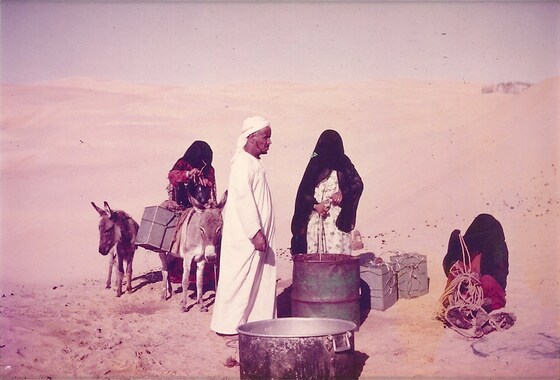
ENHG Lecture February 16: The Liwa – as it was in the Past, with Dr. Frauke Heard-Bey
07:00 PM – 09:00 PM
**Kindly note that the lecture will take place on Zoom. A link will be sent to all those registered prior to the talk. You are welcome to sign in as of 7:00 pm for an informal discussion with fellow members, and the talk will begin at 7:30.**
About the Talk: When a comprehensive geographical and historical work, Lorimer’s “Gazetteer of the Persian Gulf, Oman and Central Arabia” was being published by the Government of India, it was doubted that a place named Liwa or Jiwa really existed.
The Liwa is where the Bani Yas, a confederation of tribes, had found water and decided to develop this spread-out string of many dozens of wells in the central region for their semi-settled way of life. Historically, the Liwa became the social, economic and political heart for the Bani Yas and for some other tribes, long before the island, the town and the state were named Abu Dhabi.
In this talk, the mystery around this area is peeled back, while the Liwa and its inhabitants play an increasing role in the life of the emirate of Abu Dhabi.
About the Speaker: Frauke Heard-Bey studied history and political science in Heidelberg and Berlin. She received her Ph.D. from the Freie Universität of West Berlin in 1967 and followed her husband David to Abu Dhabi in the same year. In 1969 Frauke joined the Centre for Documentation and Research in Abu Dhabi, part of the Presidential Court in the Qasr Al Hosn. The Centre specialized in collecting archival material about the Gulf. Frauke was with the Centre for 39 years, while it moved to a purpose-built place, but before the institution became the National Archive in 2014.
Frauke has published extensively in English and German. Her book From Trucial States to United Arab Emirates: A Society in Transition has become a university textbook, and her latest book, Abu Dhabi, The United Arab Emirates and the Gulf: Fifty Years of Transformation (2016) contains a collection of 30 articles, conference contributions and autobiographical notes. It is available from Gerlach Press in Berlin and Amazon.
Frauke was honoured with the Abu Dhabi Award in 2007.
Feb
02
2021
Past Event
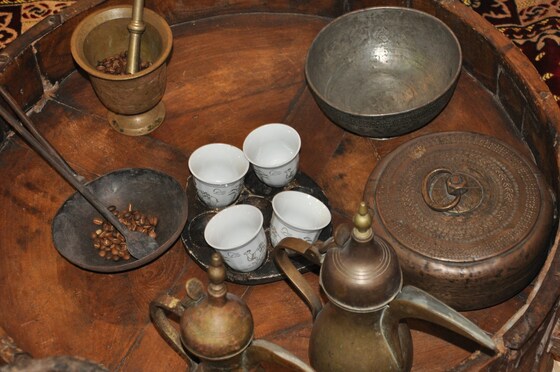
ENHG Lecture: A Glimpse of the Culinary and Cultural traditions of The Emirates, with Alexandra von Hahn
07:00 PM – 09:00 PM
About the Talk:
Alexandra von Hahn will give us some insights on the work that she did for her award wining cookbook, “The Culinary Magic of the Emirates.” A celebration of the food rituals, culture, etiquette and traditions of the people of the United Arab Emirates, the book is a legacy piece for local and international audiences who are passionate about Emirati cuisine and culture.
Alexandra collected authentic recipes from twenty-seven Emiratis from across the UAE, spending time with each during her years within UAE diplomatic circles. The result is an intimate glimpse into Emirati homes, food rituals and traditions.
About Alexandra:
The daughter of Baltic-German and Hungarian aristocrats Baron Peter von Hahn-Lieven and Countess Marie Jeanne Sennyey-Széchenyi, Alexandra von Hahn was born in Santiago, Chile, where she lived until the age of 11, after which she and her family relocated to Montreal, Canada. She moved to Abu Dhabi along with her two children when her diplomat husband got a posting in the capital city.
It was while living in the UAE that she got the idea of researching and compiling a cookbook dedicated to authentic Emirati cuisine. Using her connections in diplomatic circles, she gained access to many Emirati families, who invited her into their homes, where she had the opportunity to observe their traditional cooking techniques, taste their family recipes and marvel at their extraordinary hospitality.
She now splits her time between Canada, Germany and the UAE.
Jan
19
2021
Past Event
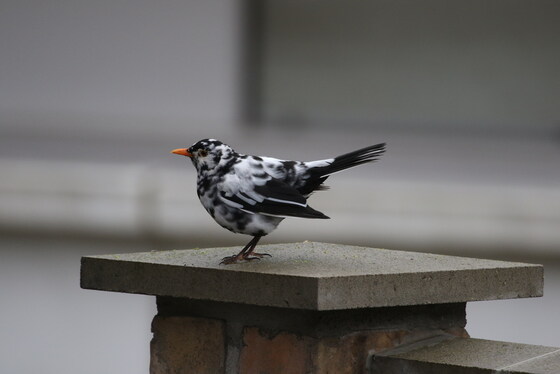
ENHG Lecture January 19: Colour Aberrations in Birds--Which Kinds Exist? By Dr. Achim Zedler
07:00 PM – 09:00 PM
About the talk:
About 18 years ago, Dr. Achim Zedler found increasing numbers of birds with colour aberrations, and asked himself what caused these variations. Could it be environment or genetic reasons, or something else? He became acquainted with Hein van Grouw, a Dutch curator and breeder, who has done research on colour aberrations of birds. Dr. Zedler further developed the classifications discovered by Va Grouw, and introduced them to German ornithologist literature starting in 2005.
About the Speaker
Dr. Achim Zedler is an orthopaedist and Head Physician of the German Federal Pension Fund Hessen. His great passion is field ornithology and saving nature. He is engaged in the greatest nature protection organisation in Germany, the NABU – Naturschutzbund Deutschland, and is chairman of the chapter from the district of Gießen, a county close to Frankfurt. Furthermore, he has been the main author of an annual ornithological report about the 'Landkreis Gießen' for 30 years. He has published many articles on different aspects of field ornithology, and is also a member of the Hessen rare birds comittee.
Jan
05
2021
Past Event
ENHG Lecture: Mangrove Ecosystem Loss on Oman's East Coast: Climate Change in the Mid-Holocene by Valeska Decker
07:00 PM – 09:30 PM
Welcome back to our Zoom lecture programming! Please register for the talk, and a Zoom link will be sent prior.
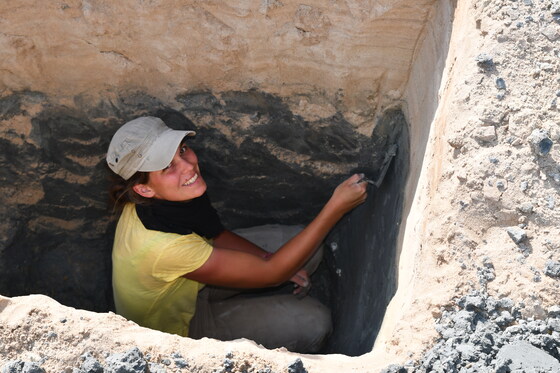
About the talk: Sedimentological, geochemical and palaeontological investigations of the coastline of northeastern Oman provide an in-depth insight into Holocene sea level and climate conditions. The spatial distribution and species assemblage of mangrove ecosystems are analysed. These are sensitive to changes in sea level and precipitation and thus reflect the ecological conditions. The close proximity to archaeological sites allows us to conclude an human interaction with the mangrove ecosystems. Our interdisciplinary investigations reveal that the mangrove ecosystem collapsed along the eastcoast of Oman ca. 6000 cal yr BP at a decadal scale. There is no sedimentological evidence for a Mid-Holocene sea level highstand. The reason for the ecosystem collapse was neither sea level variation, nor anthropogenic interferences, but lowering of precipitation values related to a southward shift of the Intertropical Convergence Zone. This results in a decrease of freshwater input and an increase in soil salinity. Aridification caused increased deflation and silting up of the lagoons.
About the speaker: Valeska Decker studied Geosciences at the Institute of Geosciences at Bonn University. She focused on paleoenvironmental research and did her bachelor’s thesis on micropaleontological investigations on African foraminifera and her master’s thesis on pollen analysis of a lake sediment core from Germany. Both theses cover reconstruction of ecological settings and their variability in time. Ms. Decker graduated as M.Sc. Geosciences in 2017. She started her PhD under supervision of PD Dr. Gösta Hoffmann at Bonn University and now focusses on mangrove ecosystems as an indicator for climate and sea level changes within the northern Indian Ocean.
Dec
15
2020
Past Event
ENHG Lecture: Tsunami History of Oman with Dr. Gösta Hoffmann
07:00 PM – 09:00 PM
*Kindly note that this talk will take place on Zoom, and a link will be sent to all those registered.
About the Talk:
The coastline of Oman borders the north-western Indian Ocean. Although the country is sparsely populated in general, the population and critical infrastructure are concentrated along the coastline. The 2004 Indian Ocean tsunami showed that only the southern part of the coastline is vulnerable in terms of tsunami inundation from this far-field location. However, a bigger threat is related to the Makran Subduction Zone (MSZ). The hazard potential of the MSZ is not well understood and the instrumentally recorded seismicity is concentrated in the east. The only recorded historical earthquake-related tsunami occurred on 27.11.1945.
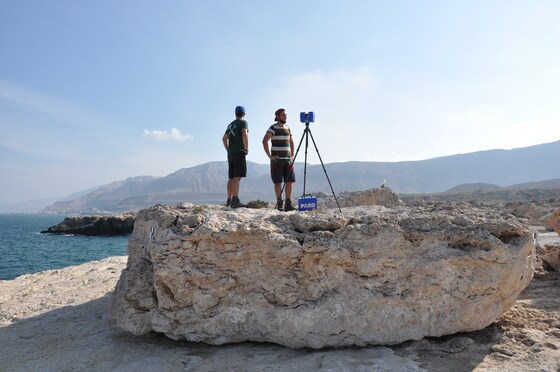
We carried out an interdisciplinary approach to reconstruct the tsunami history and to quantify past tsunami events. We interviewed last surviving eye-witnesses concerning the 1945 event and used traditional geological methods to reconstruct older events. As a result, we are able to show that the observed tsunami of 1945 was not the most severe, as a tsunami event around 1000 years ago moved large blocks and boulders along the coast. Furthermore, archaeological evidence suggests a widespread impact of the event.
About the speaker:
Dr. Gösta Hoffmann is head of the Environmental Geology group at Bonn University in Germany. As a geologist he has worked in Oman for many years, starting in 2008 when he was appointed at the German University of Technology in Oman (GUtech). His works concentrates on coastal evolution. Gösta is principal investigator of the UNESCO IGCP project “Sea-level change from minutes to millennia”. For his work in Oman he was awarded with the National Research Award by the Research Council in 2015.
Dec
08
2020
Past Event
ENHG Talk December 8: What is Conservation Genetics? With Dr. Alice Mouton
07:00 PM – 09:00 PM
**This talk will take place over Zoom, and a link will be provided for all who register. The talk itself will begin at 7:30, but you are welcome to log on as early as 7:00 for informal conversation with other members.**
About the talk:
The recent extinction of many species, and continuous threats to many more, has made conservation biology crucial in the 21st century. With the application of molecular techniques to the study of endangered species, conservation genetics has become a discipline. Genetic variation interpreted in a population genetic context can be used to determine the contemporary status and evolutionary history of a species, and can predict its future. The talk will provide a general introduction to conservation genetics, along with the challenges and promises of the discipline, as well as case studies.
About the speaker:
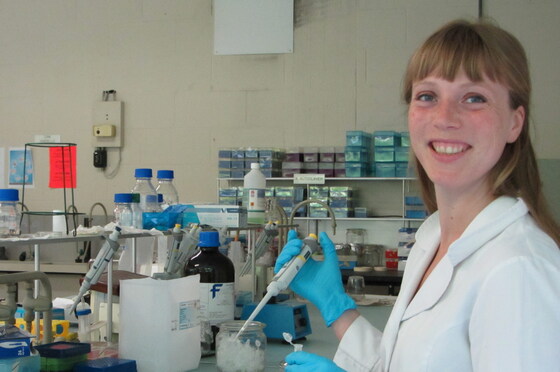
Dr. Alice Mouton is a biologist interested in conservation and evolutionary genomics. Her research interests are mainly related to the study of the evolutionary history of mammals, and with the assessment of the biological and genetic diversity of animal populations to promote conservation. She received her PhD at the University of Liege (Belgium), where she applied traditional genetic tools to study a protected rodent (Gliridae) in Europe. She spent four years at UCLA as a postdoc at Robert Wayne’s laboratory, where she worked on several genomic projects, from investigating the effects of anticoagulant rodenticides on bobcats in the Santa Monica Mountains (CA) to determining the contributions of gene expression in olfactory ability among different dog breeds, and reassessing the phylogeny of the direwolf in the canidae family. Alice is now a senior postdoc at the University of Liege, where she is applying genomic tools to study the critically endangered European mink.
Nov
24
2020
Past Event
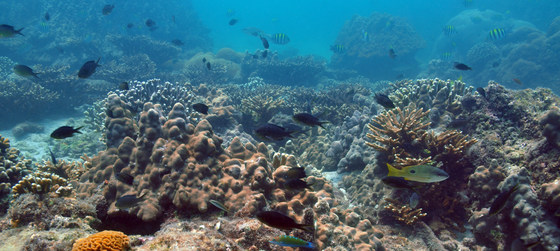
ENHG Lecture: Reef fish communities in the Arabian Gulf: Insights into the Future of Tropical oceans Under Climate Change by Dr. John A. Burt, New York University Abu Dhabi
07:30 PM – 09:00 PM
**Kindly note that the lecture will take place on Zoom. A link will be sent to all those registered.**
About the Lecture:
The Arabian Gulf is one of the most thermally extreme marine environments on earth, representing a unique ‘natural laboratory’ in which to develop an understanding of how marine organisms might respond to future climate change in other regions. Coral reefs represent the most biodiverse coastal ecosystem in Arabia, and they are home to a diverse array of ecologically and economically important fish communities that serve numerous functionally important roles and support the economic activities of human populations. By examining the patterns and processes driving the dynamics of reef fish communities in this region, we can better understand the implications of future climate change elsewhere in the tropics. In this seminar, Burt will provide a background on the environmental setting of the Gulf, provide an overview of what he and his group have learned over their past decade of studying reef fish communities in the region, and what this might suggest for the future of tropical reefs across the globe as their temperatures reach Gulf-like conditions in the coming decades.
About the Speaker:
Dr. John Burt is an Associate Professor of Biology and Head of the Environmental Studies Program at New York University Abu Dhabi. A marine biologist, Burt uses the Arabian Gulf as a ‘natural laboratory’ to study how organisms cope with and respond to extreme environmental conditions, a topic of increasing global interest as a result of climate change. His lab has ongoing research on corals and reef fishes, seagrasses and mangroves, exploring these questions from the levels of genomes and molecular biology to ecological communities. In addition, Burt continues to study the ecological and management implications of coastal developments in urban areas and seeks to develop more sustainable coastal management practices in the Gulf. He has been based in Abu Dhabi since 2009, and has published over 90 scholarly articles and book chapters on marine ecology and conservation in Arabia. He was awarded the 2017 Sheikh Mubarak Bin Mohammed Al Nahyan Award for Natural History of the United Arab Emirates and has been a long-time contributor to the Emirates Natural History Group, having given talks for Abu Dhabi, Al Ain, Dubai and Ras Al Khaimah chapters.
Nov
03
2020
Past Event
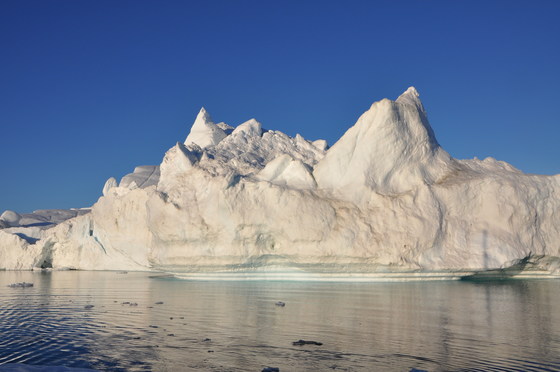
ENHG Lecture November 3: Glacier Change in Antarctica and Greenland and Its Influence on Coastal Cities of UAE by Dr. Xianwei Wang
07:30 PM – 09:00 PM
About the talk:
Our Earth is changing fast, and the global temperature has increased at an average rate of 0.07°C per decade since 1880. As a consequence, the ice and snow in Antarctica and Greenland are melting quickly into the ocean, raising the global sea level by 11-16cm in the twentieth century, and threatening the infrastructure safety of some coastal cities.
This presentation will cover the warming of global land and ocean surfaces, as well as polar glacier changes. The effect of global warming on polar glaciers will be introduced, as well as glacier and ocean observation from space, and some in-situ field work we conducted in Greenland and Antarctica. The potential threat of global sea level rise on coastal cities such as Abu Dhabi will be discussed.
Biography of Xianwei Wang
Dr. Xianwei Wang is a remote sensing scientist interested in polar glacier change and global sea level rise. He obtained his PhD from the Chinese Academy of Sciences, China, in 2012, and works at Ohio State University (OSU) and New York University Abu Dhabi (NYUAD). Since 2015, he has worked as a research scientist at the Center for Global Sea Level Change, NYUAD.
Dr. Wang has a wide interest in the Earth science applications of remote sensing observations, especially in research related to global environmental changes. He is very good at extracting three- dimensional changes to the Earth surface, and has published 23 peer-reviewed journal papers covering different topics related to land surface and polar glacier changes. Currently he is primarily focusing on glacier changes in Antarctica and Greenland, and the forces driving rapid change to the global climate and sea level.
Dr. Wang has ten years of experience in polar ice change study and rich experience in polar ice expedition. He conducted field work in Antarctica with the Chinese Antarctica Expedition and the Korean Polar Research Institute one and three times, respectively. He also went to Greenland with New York University three times to observe rapid glacier retreat and ocean-ice interaction in both East and West Greenland.
Oct
20
2020
Past Event
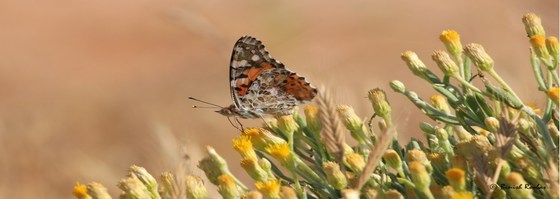
ENHG Lecture: Butterflies of the UAE by Binish Roobas
Abu Dhabi
07:30 PM – 09:00 PM
**This lecture will take place on Zoom. Kindly register on the site, and the link will be sent to you prior to the lecture.
About the talk: Around 58 different butterfly species have been counted to date in the United Arab Emirates. Binish Roobas has studied butterflies in the UAE extensively, and has contributed numerous new butterfly sightings. His latest find was a Himalayan species, the Indian Fritallary (Argynnis hyperbius), in Wadi Wurayah, Fujairah, which was possibly the first record in all of the Arabian Peninsula. Binish’s talk will be an introduction to his upcoming book, “Butterflies of the UAE,” and will cover the different families with their recorded species and how to identify them, as well as insights into their ecology, including feeding habits, migration, host plants, life cycles and behavior.
About The Speaker: Binish Roobas took his degree in Zoology at University of Kerala, where he was a naturalist guide. During his time in the UAE, he has worked as a zoologist and supervisor at the butterfly House in Sharjah. He has also pursued his interests as a naturalist and photographer, sharing his efforts through regular short reports and photographs in the monthly newsletter of the Dubai Natural History Group (Gazelle), longer papers in the periodic journal of the Emirates Natural History Group, Abu Dhabi (Tribulus), occasional short talks, and as a leader of natural history field trips in the UAE and abroad.
Binish has done several years of intensive field work in diverse habitats in different Emirates. While primarily focused on insects, Binish contributed to the recognition and study of several rare species of UAE wildlife, notably Walton's mudskipper and Bosk's fringe-toed lizard.
Binish was honoured for his contributions to the knowledge about the UAE´s Natural History with the 2016 Sheikh Mubarak bin Mohammed Award for Natural History, established by Sheikh Nahyan Bin Mubarak, Minister of Culture and Knowledge Development.
.
Oct
06
2020
Past Event
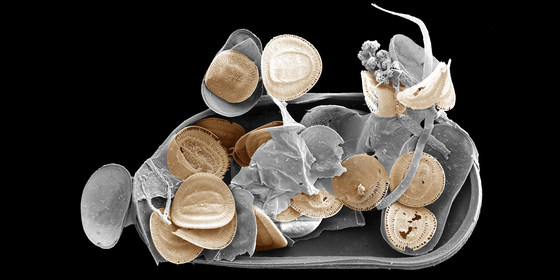
ENHG Lecture October 6: Ostracods: Tiny But Very Useful Crustaceans
07:30 PM – 09:00 PM
Kindly note that this lecture will take place via Zoom. A link will be sent prior to the talk for all who register. There are unlimited spaces, so feel free to pass the invite to your friends!
Short summary:
Ostracods are an important group of crustaceans which are used as powerful tools in biostratigraphy, palaeoenvironmental and palaeoclimate studies and monitoring of aquatic habitats. Ostracods produce calcareous shells which are often preserved in the rock record. The talk will provide a general introduction on ostracods, and the use of ostracod shells in studies of ancient aquatic environments. Past water availability can be reconstructed based on analysis of ostracod shells, and the degree of human impacts on aquatic ecosystems can be assessed in the context of long-term natural fluctuations of the environment and climate. The state of research with respect to ostracods in the United Arab Emirates will be reviewed.
About Steffen:
Steffen Mischke is a geologist with a main interest in environmental and climate change during the most recent period of Earth’s history, the Quaternary. He graduated from a PhD study at the Free University of Berlin in Germany where he worked as a junior professor for six years afterwards. He spent a year as visiting researcher at the University of Minnesota in Minneapolis (USA), and worked as research fellow at University of Potsdam (Germany). Steffen has worked as a geology professor in the Faculty of Earth Sciences at the University of Iceland since 2015, teaching undergraduate and graduate students and acting as a PhD supervisor. Steffen’s research has a focus on the dry regions of the Old World including China, Mongolia, Tajikistan, Jordan, Israel and Morocco.
