

Emirates Natural History Group (Abu Dhabi Chapter)
Powered by
Past events
All events
Past events
Oct
28
2022
Past Event
Day to Night Desert Exploration
Al Wathba Desert
04:00 PM – 09:00 PM
Dear members!
We are excited to invite you on a trip out to the Wathba Desert to look for local flora and fauna and follow tracks in the sand and see if we can identify who or what made them.
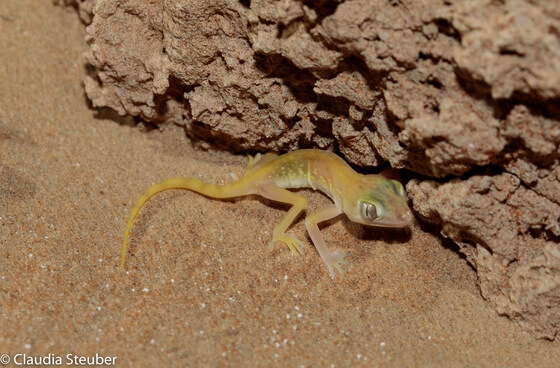
We will continue our search as darkness descends when the fringe-toed lizards hide and the Arabian geckos start their hunt for insects.
Joining our trip will be some biologists and local wildlife enthusiasts who are passionate about sharing their knowledge of the area and the animals and plants that inhabit our beautiful local desert.
We will end our excursion with a dinner at a local farm hosted by one of our most passionate and generous ENHG team members!
The trip has limited spaces and places will be given on a first-come served basis.
More information regarding our adventure will be sent out once places have been secured.
We are looking forward to seeing you there!
Warm Regards
The ENHG Team
Oct
18
2022
Past Event
How the Ai Nature application can help in the management of snakebites -By Dr. Khosrow Rajabizadeh
08:00 PM – 09:00 PM
About the speaker:
Dr. Khosrow Rajabizadeh has 15 years of academic background in herpetology, leading to PhD in biology from Ghent University in Belgium, followed by a postdoc in functional morphology and applied computer science. He is the founder of AI.Nature start up studio in Paris.
About the talk:
Snake envenomation is a public health challenge in many tropical and subtropical countries, mostly in Africa, Asia, and Latin America. The WHO recently considered snake-bite envenomation as a neglected tropical disease, which is an important milestone in disease control. About 5.4 million snake bites occur each year, resulting in about 81.000 to 137.000 deaths and around three times as many permanent disabilities each year (www.who.int). This human-snake conflict partly results from the difficulty of snake identification that currently relies on expert knowledge. Snake identification help doctors to better plan the snakebite treatment. AI.Nature is a French startup project, incubated in INRIA, Paris, and tries to combine AI and zoological science to help doctors in the identification of snakes. AI.Nature produced a web application that provides AI-based services for 1) image-based snake auto-identification; 2) location-based snake identification. The web application is already launched for western Asia and northern Africa and is tested by doctors, even in real cases.
Jun
28
2022
Past Event
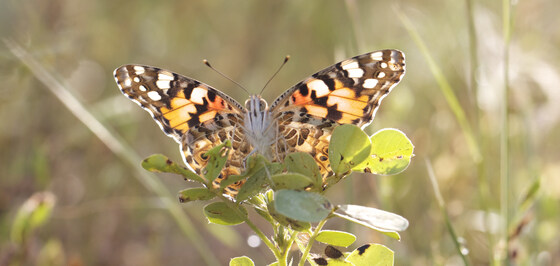
The migrations of the Painted Lady butterfly (Vanessa cardui): movement ecology and population dynamics by Dr. Gerard Talavera
07:00 PM – 09:00 PM
About the speaker:
Gerard Talavera is an evolutionary biologist and entomologist. He is a tenured scientist at the Spanish Council of Scientific Research (CSIC) currently developing his research at the Botanical Institute of Barcelona (IBB), where he leads the Insect Migration and Phylodiversity Lab. Gerard has a background in phylogenetics, ecology, and the evolution of butterflies and he has a particular interest in the evolution of migratory behavior, which is one of the main research lines in his lab. His research combines interdisciplinary tools to investigate questions related to movement ecology, population genetics, and genome evolution. As a National Geographic Explorer, he has been leading a challenging project since 2013: unraveling the worldwide migratory patterns of Painted Lady (Vanessa cardui) butterflies. He has long experience in the laboratory as well as in exploration and has led numerous scientific expeditions in more than 30 countries on five continents. On a more personal side, he spends his free time climbing mountains and caving, a passion for exploration shared with the study of biodiversity.
About the talk:
Migration in butterflies is suspected to be an overlooked phenomenon, even its major ecological relevance. The real extent of the diversity, geographical ranges, and abundances of butterflies on the move is not well known, partly because of the lack of field data and the technical limitations associated with tracking small, short-lived, organisms. In this talk, he will take us on a journey about how it is studying migratory butterflies, from the field to the lab. He will show how a multidisciplinary approach can help in tracking migratory movements, including tools on genetics, isotope ecology, ecological niche modeling, pollen metabarcoding, field ecology, and citizen science. In particular, he will show the example of the Painted Lady butterfly (Vanessa cardui), the most cosmopolitan of all butterflies and the one exhibiting the widest distributional range of any insect performing large-scale migratory movements. With a particular focus on the Palearctic-African migratory range, he will describe the latest discoveries showing regular trans-Saharan migrations, that entail astonishing distances of >4000 km, similar to those of some birds. Overall, it will discuss about the scale and potential implications that insect migratory movements represent for ecosystems and nature conservation worldwide.
Jun
07
2022
Past Event
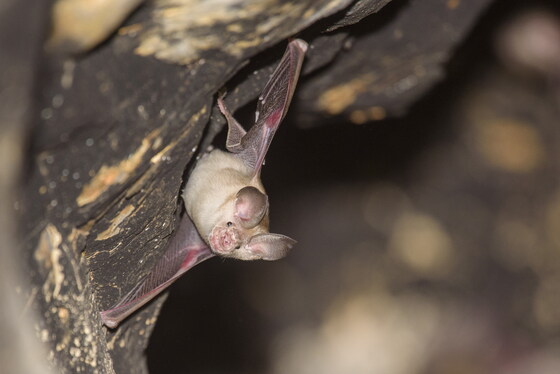
An overview of the Terrestrial Mammals of UAE with emphasis on bats by Dr. Jacky Judas
07:30 PM – 09:00 PM
About the speaker:
Jacky Judas is a naturalist, interested in all biodiversity and nature conservation related topics, but more specifically on birds and mammals. He was born in the North of France, where he grew up, quickly became interested in natural history, and started studying biology. After a master in Land planning and environment management in Lille, he spent the year 1991 on Amsterdam Island, part of the French Antarctic and subantarctic territories in the middle of the Indian Ocean, studying penguins and albatross. From 1993 to 1998, he studied the ecology of Collared Peccaries in the tropical forest of French Guiana for his PhD, and moved to Saudi Arabia in 1998, working at the National Research Center of Taif on the reintroduction of the Houbara Bustard up to 2003. He moved to UAE in 2004, where he continued working on the Asian Houbara Bustard for the National Avian Research Center of Abu Dhabi, travelling through Kazakhstan, China, and Yemen to study the species ecology and assess population status. In 2012, he joined Emirates Nature-WWF, working as Research manager on the implementation of Wadi Wurayah National Park in Fujairah Emirate, conducting surveys on Odonata, Owls, and bats through the Hajar Mountains, and implementing different conservation projects throughout the country, in Wadi Shis and Al Bithnah in particular. He left UAE in 2021 to move back to Saudi Arabia, where he is now working as Wildlife conservation manager for Soudah Development Company in the Asir region.
About the talk:
Despite being in an arid environment, UAE holds a relatively diverse terrestrial mammal fauna, with 51 species, distributed among 8 orders and 21 families. Rodents and bats are the 2 orders that present the largest species diversity but have so far been poorly investigated. Bats are important players in the ecosystems functioning and have recently focused the attention of the media due to their possible involvement in the origin of the Covid-19 pandemic. The UAE mammal fauna is also characterized by an important number of introduced and/or invasive species, some of them becoming established. During this talk, we will review the diversity of mammals that have been recorded in UAE, briefly going through the different species, their status, and distribution, and discussing the ecological implications of the introduced populations. We will then explore the world of bats more deeply, with some generalities on this order, the state of knowledge and threats on their populations in UAE, and how to study them.
May
31
2022
Past Event
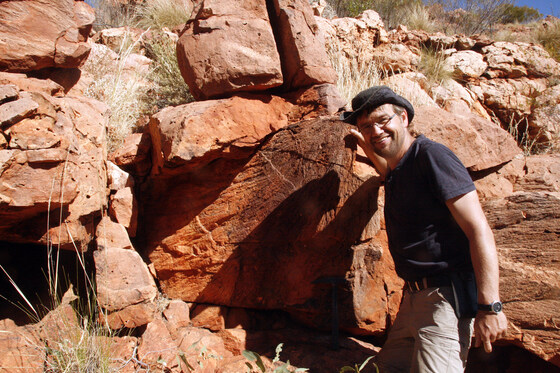
Earth on collision course: What happens during an asteroid impact? by Prof. Dr. Thomas Kenkmann
07:00 PM – 09:00 PM
About the talk:
The surfaces of planets and moons battered with craters prove that hypervelocity collisions of celestial bodies are among the most fundamental geological phenomena in our solar system. The Earth is also exposed to this cosmic bombardment. But what exactly happens during such an impact? What consequences can be expected and how high is the risk of an impact? In the talk different crater forms are presented and the highly dynamic formation of an impact is explained. The effects on the environment will be discussed as well as modern strategies to defend against asteroids that are on a collision course with the Earth.
About the speaker:
Thomas Kenkmann studied geology and paleontology at the University of Cologne and completed his dissertation in 1997 at Free University Berlin. Since 2010 he has been Professor of Geology and Structural Geology at the University of Freiburg, Germany. Thomas Kenkmann and his working group are investigating the structure and deformation inventory of impact craters on Earth and other planetary bodies at scales ranging from satellite imagery to micrometers. Thomas is a passionate field geologist, who has studied more than 40 terrestrial impact craters worldwide, and mapped many of them geologically. He is responsible for a number of crater discoveries and confirmations
Thomas Kenkmann is also experimentalist and initiated and coordinated a multidisciplinary consortium to understand meteorite impact into various rock types by conducting shock and cratering experiments. He has published 125 refereed scientific articles in journals and books and edited several special issues and a book on impact craters.
In 2012, Thomas Kenkmann won the State Teaching Award of the Ministry of Education, Research and Art of the Federal State of Baden-Württemberg, Germany. Thomas Kenkmann received the Barringer Medal and Award of the Meteoritical Society in 2018 for his key contributions to the areas of impact crater research.
May
10
2022
Past Event
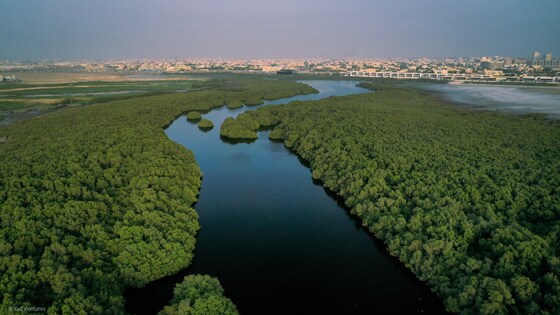
An Introductory Insight into Mangroves in the UAE – By Eleanor Vander Byl
07:00 PM – 09:00 PM
About the talk
Mangroves are a key coastal habitat that have been forgotten in many cases, leaving them to fall to the wayside. However, the past few years have seen some recognition and revival of Mangroves in the UAE. Mangroves are an important tool in the fight against climate change, as they are blue carbon ecosystems, storing great amounts of carbon in comparison to other forested habitats.
Many countries, including the UAE, have begun to recognize the role mangroves play in regard to climate change, by supporting large afforestation projects. Aside from the contributions to climate change mangroves are a stunning and unique ecosystem hosting a large variety of wildlife. They play an important role in supporting the fish stocks of the Gulf. This presentation provides a summary of the information gathered through research and observations at the Jubail Mangrove Park over the last few years, to bring the wonder of mangroves to people and stress the importance of their conservation.
About the Speaker
Eleanor Vander Byl is the Education Coordinator for Quest for Adventure, an Education and Adventure company in the UAE that has been based in the Ajman Mangroves for 7 years. Eleanor grew up in the UAE before undertaking her Bachelors in Geology and a Masters in Oceanography in the UK before returning to the UAE to join Quest. Quest has been running programs across The Emirates, notably at Jubail Mangrove Park, Abu Dhabi, and Al Zorah nature reserve in Ajman. Al Zorah, where the company is based, is a RAMSAR site spanning 195 hectares that has been established in 2016. Eleanor has been working with Quest since 2020 creating the educational and scientific content across the sites with a focus on Jubail’s Mangroves, collecting information and observations over time.
Apr
26
2022
Past Event
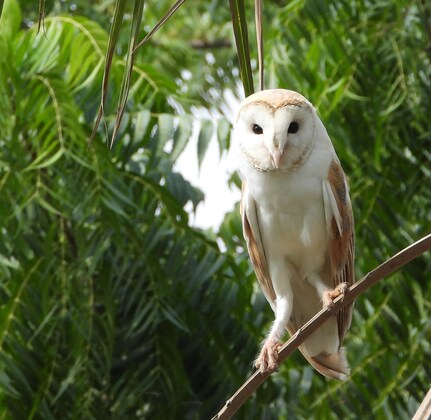
The Owls of Wadi Wurayah-by Sami Ullah Majeed
07:00 PM – 09:00 PM
About the talk
Owls are enigmatic birds, mysterious, lovable, or spooky, depending on who you ask. Owls have been associated with wisdom and intelligence in some cultures, while others associated owls with harbinger of bad omens and death. Some regard them as lucky charms and others get scared at the sight of them, local folklore has many fables on them. They are super hunters who fly stealthily and hunt in the night. All owls are carnivorous birds of prey and are very adept in hunting in their respective environments. Since owls can be found in nearly all parts of the world and across a multitude of ecosystems, their hunting skills and characteristics vary slightly from species to species, though most characteristics are shared among all species. There are 9 species of Owls found in UAE out of which 3 are migrants. Wadi Wurayah National Park (WWNP) is refuge to 7 out of 9 owls species found in UAE. Sami Ullah will let us know more about these mystical inhabitants of our national park.
About the speaker
Sami Ullah Majeed works as Park ranger at Wadi Wurayah National Park, in Fujairah, since 2014. The 220 square kilometer reserve is home to more than 800 different species (flora and fauna) and is an international acknowledged Ramsar Wetland. Sami has been working in a variety of wildlife monitoring programs in the park. He is specialized in the SMART conservation program and wildlife camera trapping. Since many years he has studied the different owl species of the National parc and collect important information about their ecology.
Mar
22
2022
Past Event
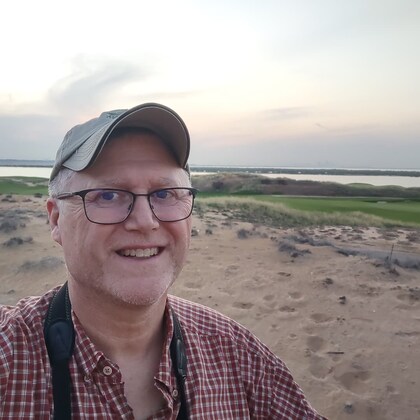
“The Mysterious Management Plan” by Tom Funke
07:00 PM – 09:00 PM
About the speaker
Tom Funke grew up exploring the fields, forests, and wetlands of southwest Michigan. Minutes from Lake Michigan, he was mentored by his father and his high school Biology teacher to pursue a Biology degree, which he earned from Western Michigan University.
While at Western, he started his 30+ year career as an intern at the Binder Park Zoo. Twenty years later, he left as their Director of Conservation Education. From there, his life took two paths, he started an outfitting business and a new job with the Audubon society as the Michigan Chapter’s first Conservation Director.
As conservation director, Funke became a champion for the society to implement management plans for its 20 bird sanctuaries. Although Funke left the Audubon in 2014 to pursue his business full time, these plans are still being implemented today.
Government shutdowns due to covid caused his business to close, and, an opportunity presented itself to move to Abu Dhabi to work as a Marine Biology Educator, having moved here in December of 2020.
About the talk:
Management plans are practical, on the ground application of the ecological sciences in preserving, creating, restoring, and managing natural areas. But what exactly is a management plan? How does one come about? Why do so few land managers use them? Funke will share the need for these documents and his experiences conducting inventories, writing, and implementing inventory & management plans at the 20 Audubon bird sanctuaries he directed while working in Michigan.
Mar
08
2022
Past Event
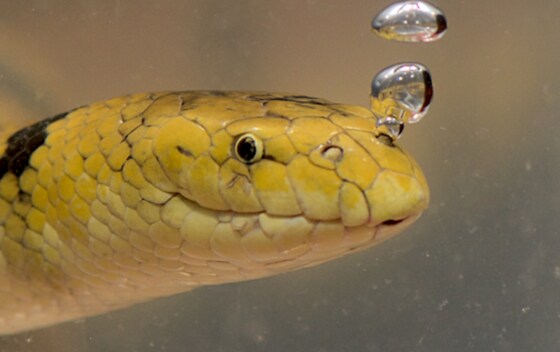
Sea snakes of Arabia by Balazs Buzas- Fujairah Marine Research Center
07:00 PM – 09:00 PM
About the speaker:
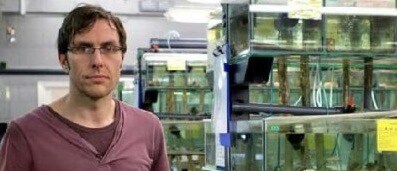
Balazs Buzas was born in Budapest, in the capital city of Hungary, and came to work in Fujairah in 2014 as a zoo manager in the Al Mayya Sanctuary. Soon after his arrival, he got involved in marine research, pioneering a study of sea snakes with Dr. Csaba Geczy and Eszter Gulyas.
Balazs later established a database and museum collection on various marine taxa, such as sea snakes, sharks and cetaceans. He is currently working in the Fujairah Research Center and lives in Fujairah with his family.
About the talk:
True sea snakes of the subfamily Hydrophiinae are important and yet barely known members of the reef and coastal ecosystems of the Indian and Pacific oceans. At least 10 of the 69 known species of sea snakes can be found in the waters of the Arabian Peninsula, but the knowledge about their ecology and distribution is very limited. Our research in the waters of the Gulf of Oman since 2015 is some of the oldest ongoing sea snake research in the region. Balazs will talk about the hidden way of life of these forgotten species and the methods of studying them.
Feb
22
2022
Past Event
Cephalopods and citizen science by Dr. Gavan Cooke
07:00 PM – 10:00 PM
About the speaker
Dr. Gavan Cooke is a cephalopod biologist with many years experience researching these amazing animals. He first fell in love with the marine world during his time in HM Royal Navy and served on the HMS Beagle, named after Charles Darwin’s famous ship. During this time he became fascinated with marine science, afterwards pursing a BSC in Zoology (University of Leeds) and a Ph.D. in Behavioural Ecology (University of Bangor, Wales). In addition to his doctorate, he has decades of fieldwork experience, experience in aquarium management and is an active cephalopod researcher with over 20 peer reviewed publications to his name. He gives public talks and has been a university lecturer for nearly 15 years.
About the talk
Dr. Gavan Cooke will talk about the cephalopods found in the Arabian/Persian Gulf. He will tell us all about their natural history, behaviour, and remarkable physiology. He founded and directs a global cephalopod citizen project. He began this project in 2017 after seeing many amazing cephalopod videos on social media, realising they may have scientific value and that the medium was a fantastic way for scientists and citizens to work side by side. He will talk a little about his work and how you could become a part of it. https://www.cephalopodcitizenscience.com/ @cephcitscience
Feb
08
2022
Past Event
Oman and the Frankincense trade –“ the scent of history” by Hugh Willing
07:00 PM – 09:00 PM
About the speaker:
Hugh Willing was an Army Officer for 36 years before retiring in 2007. Born and brought up in Africa but latterly educated in Britain he served with the Royal Green Jackets and 2nd KEO Gurkha Rifles in many parts of the world. He was an Instructor at the Royal Military Academy Sandhurst and at the Army Staff College Camberley before commanding an Infantry battalion on operations in Northern Ireland. His more exotic overseas postings included two years in both Gibraltar and Cyprus, two years in Hong Kong, and nearly five years in Oman, the latter as Defence Attaché in the British Embassy. He also served in Bosnia and Italy during the Balkans conflict. A Swahili, Arabic, and Gurkhali speaker he has travelled widely in Europe, the Mediterranean, Africa, Arabia, and the Far East both in a military and private capacity, but since 2010 as a lecturer on British cruise ships.
About the talk:
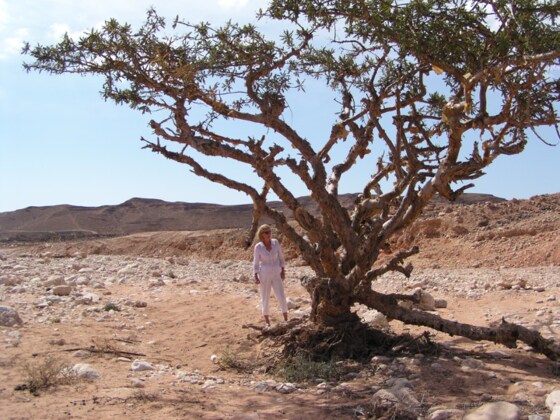
Frankincense, the quintessential aroma of Arabia, has long been considered the very essence of luxury and one of the greatest treasures of the ancient world. Indeed, the scent of frankincense still permeates everyday Omani life. For it is here that the fabled frankincense of Herodotus is grown, the frankincense guarded by flying snakes and shrouded in perpetual mist as told in the Tales of the Arabian Nights, and the same frankincense brought by the Three Wise Men to Bethlehem. This talk is about the history of the Frankincense trade in Southern Oman.
Jan
18
2022
Past Event
“Introduction to Abu Dhabi Sabkha depositional system and a case study of man-made migrating dune problem” by Dr. Mohammad Alsuwaidi, Khalifa University Abu Dhabi
07:00 PM – 09:00 PM
About the speaker:
Mohammad Alsuwaidi is an Emirati carbonate geologist and researcher working as an assistant professor in the Earth Sciences Department at Khalifa University in Abu Dhabi, UAE. He received his BSc in Petroleum Geosciences from Khalifa University “previously the Petroleum Institute” and his MSc in Petroleum Reservoir Systems and PhD in Geology from Colorado School of Mines. He worked for some years in ADNOC as a geologist prior to moving to Khalifa University. His research area involves studying the characteristics of carbonate rocks in ancient and recent settings including Abu Dhabi’s Sabkha.
About the talk:
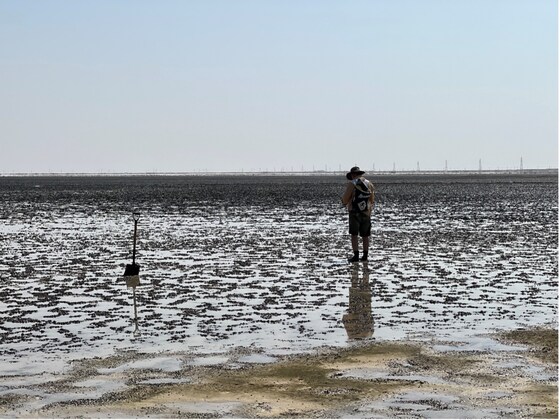
The famous Abu Dhabi Sabkha sequence will be introduced and its formation and features will be explained to the audience highlighting some interesting observations. It is a very sensitive proxy to record sea level changes and its study helps scientist understand these changes and predict sea level in the future. Moreover, a case study of migrating sand dunes that highly impacted infrastructure in Al Radeem Area (part of the Sabkha) will be presented with the causes and recommendations to resolve.
