

Emirates Natural History Group (Abu Dhabi Chapter)
Powered by
Past events
All events
Past events
Jan
04
2022
Past Event
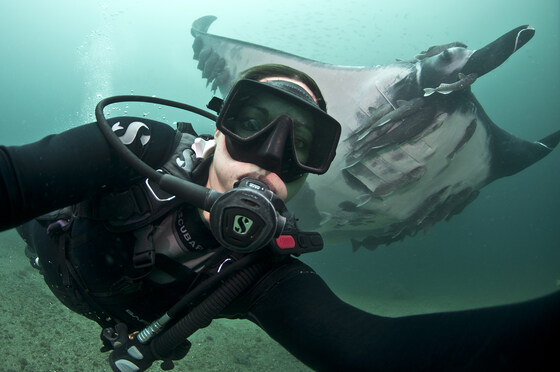
Saving Africa's Ocean Giants from Extinction' by Dr. Andrea Marshall
07:00 PM – 09:00 PM
About the speaker
Educated in the United States and Australia, Andrea was the first person in the world to complete a PhD on manta rays. After completing her thesis in 2008, Andrea stayed on in Mozambique to spearhead the conservation efforts of this species along this remote coastline. Shortly after she, along with Dr. Simon Pierce, founded the Marine Megafauna Association, which grew into the now widely known Marine Megafauna Foundation, a 501c3 registered charity in the United States. Her passionate commitment to the eastern African coast has shaped her goals as a conservation biologist. Vowing to dedicate her life to the preservation and management of the manta ray population in southern Mozambique, Andrea continues to campaign for their protection and use her scientific background to formulate plans for their management. Learning to dive at a young age, Andrea was certified at the age of twelve. Thousands of dives later, Andrea is now one of the leading marine field biologists in southern Africa. During her 24-year dive career Andrea has travelled to the ends of the globe, from Brazil to Myanmar, as both a scientist, researching sharks and rays, and also as a professional underwater photographer. She has visited over 45 countries and, aside from the Arctic, she has dived in each of the world’s ocean. Almost a decade after her arrival in Africa, Andrea’s world-leading manta ray research program continues to examine aspects of their biology, reproductive ecology, habitat use, migrations and social behaviour. Aside from dramatically increasing the level of knowledge on manta rays themselves, Andrea’s discovery of a new giant species of manta ray in 2009 was one of the largest new species to have been described by any scientist in the last 50 years. Andrea’s interests largely lie within the field of scientific exploration. She considers herself a conservation biologist, and to that end her team’s research focuses predominately on questions related to the effective management and conservation of threatened marine animals. To answer these questions Andrea is often required to travel around the world on exploratory missions. On these missions her goals include: examining particular aspects of a species biology or behaviour, exploring new habitats or regions of biodiversity, or examining areas faced with particular conservation problems. As a passionate field researcher, Andrea has always been interested in using technology to push the limits of our knowledge. Over the years she has used everything from technical diving technology to specialized scientific equipment to explore the environments used by MMF’s flagship species. On expedition, this technology allows her to go deeper, spend longer periods of time, work in otherwise hazardous conditions and survey remote locations in an effort to gain a better understanding of an animal’s daily habits, a species’ biological constraints, or the threats that a particular population of animals might face. As principal scientist for the Marine Megafauna Foundation and scientific coordinator for WildMe, Andrea continues to travel the globe researching manta rays and fighting for their protection. Living in the field year-round keeps her close to her research subjects and in touch with their conservation needs. Through her “Ray of Hope” research expeditions, she travels from Ecuador to Indonesia each year, conducting ground-breaking research and monitoring MMF’s global manta ray programs.
About the talk
The Inhambane Province of Mozambique is a globally significant area for iconic marine megafauna, particularly manta rays, whale sharks, and dugong. This coastline is also an important seasonal habitat for large predatory sharks and cetaceans, and is a major aggregation area for sea turtles and billfish. It is also home to rare or poorly studied species of elasmobranchs. The northern section of the province is protected as Mozambique’s first marine protected area, the Bazaruto Archipelago National Park (BANP), and together with the adjacent unprotected southern coastline has been mooted as a future World Heritage site by UNESCO and a Hope Spot by Mission Blue.
Over the last two decades, the Marine Megafauna Foundation (MMF), has demonstrated the critical importance of Inhambane Seascape. Our researchers have pioneered the first studies on smalleye stingrays in the wild, and have begun first formal studies of wedgefish, leopard sharks and devil rays in the country and have compiled some of the longest running datasets on manta rays and whale sharks in the world. We have also contributed to long-term studies on sea turtles, bull sharks, and dugong in the region.
MMF’s main objective is to help safeguard threatened and economically important marine megafauna in southern Mozambique by reducing their primary threats in the region and helping to protect critical habitats and important aggregation areas. We are helping to use science to underpin the development of adaptive management plans for endangered or at-risk species, to ensure that they are being protected and monitored properly by local management authorities. Perhaps most importantly, we are using our results and focused media campaigns to build on the refuge provided by Bazaruto Archipelago National Park and encourage formal protection for a significant migratory corridor for marine species to the south of this protected area.
Back home in Mozambique, Andrea is still exploring the coastline of one of eastern Africa’s most un-dived coastlines. Since arriving to Mozambique in early 2003, Andrea has logged over a thousand dives in this region discovering new reefs and documenting rare marine life. Some of her extraordinary encounters with rare species such as the small-eyed stingray and the snaggletooth weasel shark have earned her publications in scientific journals and popular magazines alike. Armed with her camera and often accompanied by documentary crews, Andrea has introduced the world to a new frontier of African diving. From the BBC’s award-winning documentary “Queen of Mantas” to Ushuaia’s acclaimed 2010 production on this remote coastline, Andrea continues to use hard science and visually stunning media to capture the world’s attention and focus it towards conservation. Said best in her own words, “The oceans still have so much to offer us, so many secrets to reveal. I still marvel at how little we know about the natural world. This sense of the unknown should drive us… it should motivate us to dig deeper, learn more. Ultimately if we are to find a true balance with the planet, it will be through the respect and preservation of our oceans. As conservationists, we must not only continue to embrace research and exploration but inspire the public to take up arms with us. Now, more than at any other point in history, we have the distinct opportunity to become both the explorers and the ambassadors of this wondrous, liquid frontier.
Nov
16
2021
Past Event
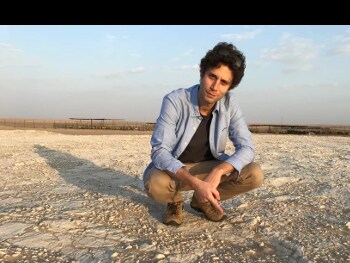
Ancient Life in the Late Miocene of Arabia: Fossils of the Baynunah Formation by Dr. Faysal Bibi
07:00 PM – 09:00 PM
Ancient Life in the Late Miocene of Arabia: Fossils of the Baynunah Formation by Dr. Faysal Bibi
About the talk:
This talk will present an overview of the years of paleontological work on the river sediments exposed in western Abu Dhabi Emirate, collectively referred to as the Baynunah Formation. The fossils of the Baynunah formation give us our only glimpse into ancient life on the Arabian Peninsula during the Late Miocene, which was around 7 million years ago. A large river system supported vegetation and diverse wildlife including no less than three species of extinct elephants. This talk will present the latest results from studies on the Baynunah fossils by an international team of experts, and that will appear in a monograph to be published in 2022.
About the speaker :
Dr. Faysal Bibi´s first experience with paleontology came while he was an undergraduate at the University of California, Berkeley. There he worked on North American fossils, participated in fieldwork in the Afar Region of Ethiopia, and started his own paleontological project in the United Arab Emirates. He went on to do a PhD on fossil bovids (antelopes) with Elisabeth Vrba at Yale University, and since that time his collaborations in African projects have expanded to include work with several international paleontological teams in Ethiopia, Kenya, and Tanzania. He also directed fieldwork in Late Miocene sediments of Abu Dhabi and is currently leading an interdisciplinary team conducting yearly fieldwork in the Upper Atbara Valley of eastern Sudan. Since his PhD work, he has had a long-term interest in the evolution of antelopes (Bovidae), as studied from both modern and fossil perspectives. The approaches he employs include comparative morphology, phylogenetics (morphology & molecules), geometric morphometrics, community structure, stable isotope and ancient DNA analysis. .
Nov
02
2021
Past Event
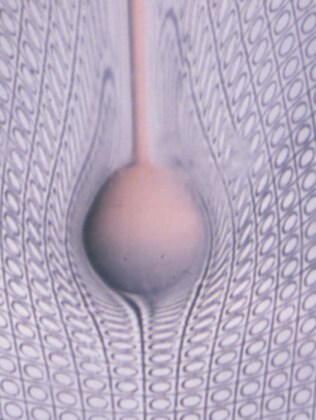
"The concept of modelling and modelling a concept" by Professor Dr. Hemin Koyi, Khalifa University Abu Dhabi
07:00 PM – 09:00 PM
About the Speaker:
Hemin Koyi is a native Kurd, a naturalized Swede and a structural geologist by profession the "most common combination". His journey includes a graduation from Uppsala University with stops in Austin, Paris and Beijing. Since August he is in Abu Dhabi, at Khalifa University's Earth Science Department. Through his profession, Hemin has repeatedly fallen in love with nature in different places on the globe, and kept his promise to her. He has chosen structural geology as his science path simply because the topic is easy to grasp and it makes him think beyond his lifetime. He speaks a couple of languages including that of rocks. And he likes modelling because he is impatient and can’t wait a couple of million years to see a structure evolve.
About the talk:
In our daily life, we use observations to understand what happens around us from simple things like accidentally dropping a plate when it is wet and slippery to more complex features of our planet. Part of this understanding relies very much on linking observation with our background knowledge of forces and rules (and emotions in some cases) to build a model which both satisfies the observations and obeys the rules of the “game”. In my presentation, I will try to demonstrate how we can use simple models to understand less obvious features and take this idea one step forward to translate observation to interpretation and understanding of the features we try to study. I will run few experiments in my presentation and look forward to your participation and help to understand their results.
Oct
26
2021
Past Event
An introduction to the Arabian Marine Species Observer (AMSO) Course with Nautica Environmental Associates-Online!
07:00 PM – 09:00 PM
About the Talk:
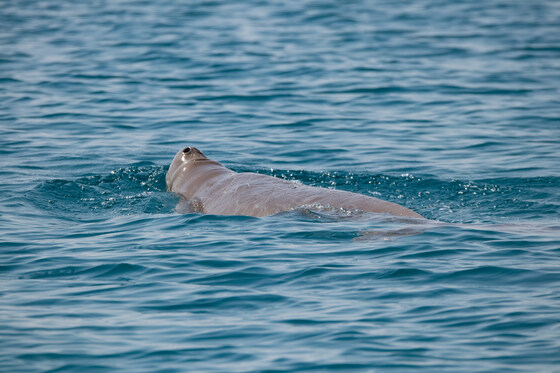
The rapidly developing Arabian Peninsula hosts a rich diversity of marine megafauna that are under increasing pressure from anthropogenic activities. Many species, in particular marine mammals, are heavily impacted by the noise created during coastal development, seismic exploration, and mere commercial shipping.
Globally, the presence of trained marine mammal observers onboard is a regulatory requirement for many large offshore developments, and this is increasingly enforced in the Arabian Peninsula region. Previously, most regionally employed observers had international qualifications, focusing primarily on the marine species of the UK or Gulf of Mexico. As a response to this regional knowledge gap, Nautica Environmental Associates and Five Oceans Environmental Services prepared The Arabian Marine Species Observer (AMSO) Course; the first regionally specialized marine species observer programme in the Arabian Peninsula.
The AMSO course introduces the marine species observer industry. It is aimed at acquisition of in-depth knowledge, attaining new skills, and achieving competencies in marine species identification, data recording, distance estimation and implementation of impact mitigation protocols. It also helps experienced individuals broaden their knowledge on the site-specific legislative frameworks protecting Arabian marine species.
The AMSO certification follows the formats of both the existing programmes, the Joint Nature Conservation Committee (JNCC) MMO in the UK as well as the Protected Species Observer (PSO) programme in the Gulf of Mexico with additional unique modules on turtle nesting surveys and responses to injured/deceased sea turtles. The course is accredited by the IMarEST (Institute of Marine Engineering, Science and Technology) as well as ACTVET (Abu Dhabi Centre for Technical and Vocational Education and Training).
The AMSO programme content and design is a collaboration between Nautica Environmental Associates, headquartered in the UAE and Five Oceans Environmental Services in Oman, combining 30 years of experience in the region with leading scientists in the field of marine species identification. This talk will be an introduction to the AMSO course and the people behind it. The talk will cover the need for such a course in our region, introduce the course contents and deliverables, provide a glimpse into each module, and discuss ways forward.
About The Speaker:
The AMSO course will be introduced to ENHG by Rebekka Pentti, Nautica’s Training Manager and marine scientist who has played an integral part in the development of the course alongside regional experts. Currently working for Nautica, Rebekka's work includes leading and supervising the collection of environmental samples in the field and comprising the data into scientific reports. In addition, she is a recognised figure in environmental outreach activities and loves to share her passion for the ocean with the youth and the wider community. Rebekka has in-depth ecological knowledge of the processes and annual variations of benthic communities and regional marine megafauna movements, and extensive experience in instructing, scientific diving and coral health scuba surveys. Rebekka is also currently involved in several ongoing environmental monitoring programs, including coral relocation efforts, mangrove assessments, and environmental baseline surveys.
Prior to working for Nautica, Rebekka worked as the SEQ Project Coordinator for Reef Check Australia, coordinating and conducting countless coral health surveys along the coast of Southeast Queensland. Rebekka completed a BSc in Marine Science (Ecology) and Bachelor of Science (Hons) with First Class Honours at Griffith University, Australia. Her dissertation focused on benthic habitat mapping of shallow and mesophotic reefs in Southeast Queensland.
Oct
05
2021
Past Event
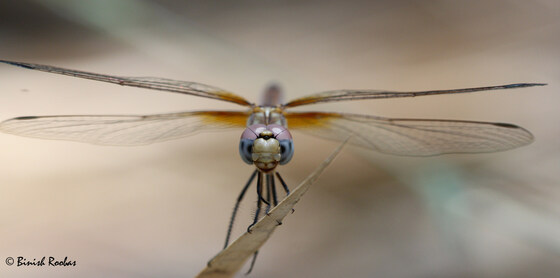
An introduction to the Odonata (Dragonflies and Damselflies) of the United Arab Emirates with Binish Roobas
07:00 PM – 09:00 PM
About the Talk:
Dragonflies and damselflies comprise the most ancient, beautiful and fascinating flying insects. They are freshwater, rapid-flying insects under the order Odonata, a term that arises from the Greek word for ‘teeth.’
More than 5000 species of dragonflies and damselflies are known in the world so far, mostly in the tropics. Some species have worldwide distribution, while others are endemic or restricted to certain specific habitats. The Arabian Peninsula boasts 64 species of dragonflies and damselflies. The United Arab Emirates hosts about 28 species, and neighbouring Oman about 42 species.
For their lifecycles, dragonflies and damselflies depend on freshwater bodies, a habitat that is not very common in a desert environment. Wadis are important natural habitats, and a good variety of different Odonata can be found in artificial ponds and lakes.
Binish Roobas has studied butterflies, spiders and dragonflies in the UAE extensively. Binish’s talk will be an introduction to the Odonata of the UAE. He will cover different families and their recorded species and how to identify them, and will offer insights into their ecology.
About The Speaker: Binish Roobas took his degree in Zoology at the University of Kerala, where he was a naturalist guide. During his time in the UAE, he has worked as a zoologist and supervisor at the butterfly House in Sharjah. He has also pursued his interests as a naturalist and photographer, sharing his efforts through regular short reports and photographs in the monthly newsletter of the Dubai Natural History Group (Gazelle), longer papers in the periodic journal of the Emirates Natural History Group, Abu Dhabi (Tribulus), occasional short talks, and as a leader of natural history field trips in the UAE and abroad.
Binish has done several years of intensive field work in diverse habitats in different Emirates. While primarily focused on insects, Binish contributed to the recognition and study of several rare species of UAE wildlife, notably Walton's mudskipper and Bosk's fringe-toed lizard.
Binish was honoured for his contributions to the knowledge of the UAE´s Natural History with the 2016 Sheikh Mubarak bin Mohammed Award for Natural History, established by Sheikh Nahyan Bin Mubarak Al Nahyan, Minister of Culture and Knowledge Development.
Jul
01
2021
Past Event
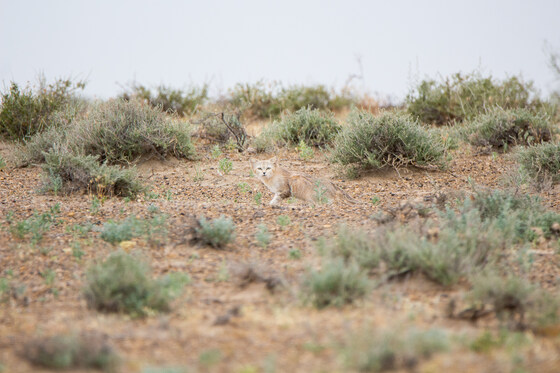
ENHG Lecture July 1: Caught on Camera--The Habitat and Habits of the Secretive Sand Cat, with Alex Brighten
07:00 PM – 09:30 PM
Dear all
For our last lecture of the 2020-2021 season, we have a slight change of routine, holding the talk on a Thursday evening. As always, the zoom link will be emailed prior to the lecture to all those who register, and the zoom will open at 7 pm for a quick catchup chat with members, with the lecture beginning sharp at 7:30. Looking forward to seeing you then.
About the talk: Little is known about the ecology of the Sand Cat Felis margarita throughout its range in the deserts of North Africa through to Central Asia and the Arabian Peninsula. In this talk I will present our observations of Sand Cat in the southern Kyzylkum Desert, Uzbekistan, Central Asia. Specifically, I will discuss our paper where we detail Sand Cat potentially preying on a large bird and the rare trail camera footage we were able to get of the cat returning to the kill on subsequent nights. This is an exciting record of this understudied, elusive cat and contributes to the knowledge about the feeding ecology and varied diet of the Sand Cat and its opportunistic hunting strategy.
About the Speaker: Alex Brighten is a field biologist specialising in the study of movement and breeding ecology of birds. She has worked as a research assistant on projects using radio- and satellite-telemetry, bioacoustics, cameras, and varied techniques in tagging and tracking owls Ninox novaeseelandiae and Brown kiwi Apteryx mantelli in New Zealand, European nightjar Caprimulgus europaeus and Western jackdaw Corvus monedula in the UK and Asian houbara Chlamydotis macqueenii in Uzbekistan. This latter project provided the opportunity for the Sand Cat paper after spending considerable time in the Kyzylkum desert conducting fieldwork. It is also through this work that Alex discovered a fascination and love of desert ecosystems and animals which live there. Very different to her green and rainy upbringing, she loves the extremes and contrasts of deserts and is intrigued by the challenges faced by desert inhabitants.
Alex’s current role as Aviculturist and Monitoring Officer for Project Godwit (England, UK) involves hatching, rearing and releasing wild-laid Black-tailed godwits Limosa limosa and then monitoring the released birds in the wild. This project aims to assist population recovery of this endangered migratory bird in the UK. When not doing fieldwork, Alex can be found biking, running, photographing nature, or trying hard to progress beyond beginner level in playing electric guitar.
Jun
01
2021
Past Event
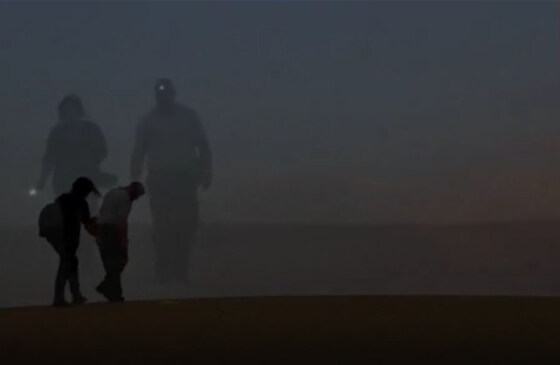
ENHG Lecture: When UAE Nights Come to Life, with Priscilla Van Andel
07:00 PM – 09:00 PM
Dear members: as always, we will host this talk on Zoom, starting at 7:00 pm with an informal chat amongst ourselves that you are most welcome to join. Our talk will begin at 7:30. The Zoom link will be sent prior to all those registered.
About the talk: During this talk I will share my nighttime experiences here in the UAE, where I have extensively explored the dark outdoors. The nightlife in the UAE mountains and deserts is exciting, with many different animal species, such as mammals, fish, insects, arachnids, reptiles and birds. I will be taking you on a short tour throughout different habitats during this hour.
A lot of the UAE's wildlife suffers from urbanization and leisure activities such as dune bashing. Many affected animals move further away deeper into the deserts and mountains, while other animals adapt to the system and come to live closer to urban areas, which is not always favored by the public.
About the speaker: 16 years ago, my husband and I moved to the UAE when he was offered a job in Sharjah. Back in The Netherlands, our home country, I was an export manager specialized in Letters of Credit. Since the UAE wasn’t exporting a lot, I could not find myself a suitable job. We were always exploring the countryside in the UAE and Oman, and when we started discovering the local nature, we came up with the idea to start my own tailor-made touring company for business people and tourists, a max of 4 people per trip. This little business was doing very well, showing the people UAE’s nature spots, until the UAE laws changed and I couldn’t offer my services any longer.
On the side I did photography workshops for beginners, while in the meantime I became more and more familiar with the local wildlife. As one nature lover attracts others, a nice group of friends with the same passion grew, and eventually reptiles became one of my favorite animal groups, and I learned ecosystems, the environment and conservation at the same time. When herpetologists and conservationists taught me about nature, I was always happy to be of help collecting data, among others for the Wonder gecko project, and providing photographs.
Of course as an amateur there is no greater honour and nothing I’d rather do more than share my nature experiences and show people the importance of wildlife and nature.
Together with a friend I had a part in the films made by Jonathan Ali Khan for Emirates ‘Discover the wilderness of the UAE’ and a few other productions. In between I have kept myself busy organizing clean-ups, workshops and lectures in schools, doing ethical wildlife photography for the Sharjah art museum, guest speaking at Dubai municipality nature events, and supplying photographs for IUCN and other organizations. To make a long story short, I always keep myself busy with nature and volunteering wherever needed.
May
18
2021
Past Event
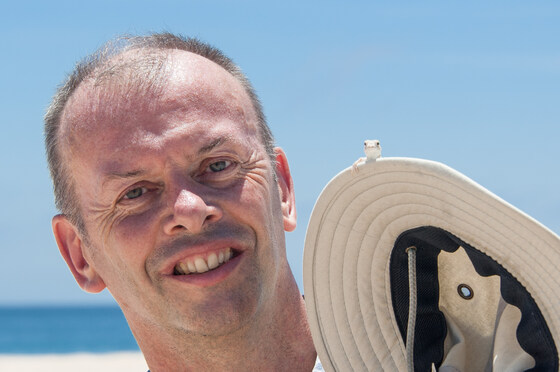
ENHG Talk: Aspects of the Flora and Vegetation of the Arabian Peninsula with Dr. Gary Brown
07:00 PM – 09:00 PM
About the talk: In this Zoom presentation, Gary draws upon his extensive experience of the region to discuss various issues dealing with the flora and vegetation of the Arabian Peninsula as well as a number of associated topics. The first part of the presentation begins by highlighting some of the major problems concerning botanical research and conservation in the region, in particular with examples from the UAE. The second part will look at a several fundamental issues regarding the vegetation, again using examples primarily from the UAE, but also from adjacent areas. The third part will take a more integrated perspective and examine some of the "real-life" questions that arise when working on practical ecological assignments.
Throughout the presentation, Gary emphasises the absolute necessity for a classical field-based approach and a deeper understanding of ecological theory, both aspects that are central to addressing the major ecological challenges facing us today, including the biodiversity crisis, desertification, habitat restoration and climate change. "Modern" methods are seen as useful and invaluable tools, albeit with certain limitations.
About the speaker: Gary Brown studied botany, biochemistry and microbiology at Bonn University. Both his master's and PhD theses focussed on the remarkable heavy metal vegetation and ecophysiology of heavy metal-tolerant flora of Central Europe. After he had completed his PhD, he took up a position at Kuwait University. His research concentrated on the vegetation ecology of degraded desert ecosystems. After a 3-year stint back in Germany to obtain a full professorship degree, Gary returned to Arabia to accept a position as botanist at ERWDA (now EAD). From there he moved to Kuwait to lead research into restoration of desert ecosystems as part of the United Nations Compensation Commission programme resulting from the Gulf War, a theme that has been central to his work ever since, followed by positions at Sultan Qaboos University in Oman and with the Kuwait Government, the latter dealing specifically with mega-restoration projects. Since returning to Europe in 2015, Gary has been working as an independent consultant, mainly on large projects in the UAE, Oman and Saudi Arabia dealing with vegetation, ornithology, landscape and town planning, national park establishment, habitat mapping and habitat assessments.
Gary has published extensively in international peer-reviewed journals and has contributed to various book chapters on ecological aspects of the vegetation of the Arabian Peninsula.
May
04
2021
Past Event
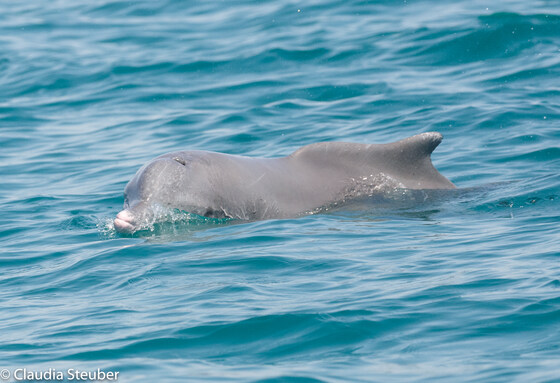
When Citizens Meet Science: Progress Towards the Conservation of Dolphins in the the UAE with Dr. Ada Natoli
07:00 PM – 09:00 PM
Dear all: kindly note that as always, we are holding this talk via Zoom. The connection will be open as of 19:00 for an informal meetup with fellow members, and the talk will begin at 19:30. We will send a zoom link to all registered guests. See you on Tuesday!
About the talk: Whales and dolphins play a critical role in maintaining a healthy marine ecosystem and they are considered "sentinels" of the status of the marine environment. Although their protection will also directly benefit all the marine resources, it is often difficult to obtain sufficient data on their population status, trends, and threats they face in the region to trigger the formulation and implementation of effective conservation measures. Whale and dolphin research often implies costly surveys and skilled dedicated personnel, thus is difficult to finance, especially in areas where the general awareness and baseline information of these species are scarce.
In this talk, we provide a general introduction on whales and dolphins, and we present an update of the current understanding of the most regular species occurring in UAE waters based on data collected by scientists and the public in the past nine years, highlighting the crucial role that the public can play in supporting conservation.
About the speaker: Dr Ada Natoli is a biologist specialized in the conservation genetics of marine species, specifically marine mammals. Her main interest is investigating the evolutionary mechanisms generating population structure and speciation in natural populations, population connectivity and migration patterns and ultimately utilising this information to support authorities in formulating conservation measures. Ada has extensive laboratory and marine field research experience and her background covers also zoology, chemistry, microbiology and ecology. She completed her PhD (University of Durham, UK) on the molecular ecology of bottlenose and common dolphins and her first degree in biology (population genetics) at the University of Milan, Italy.
In the UAE, Ada founded and currently directs the UAE Dolphin Project to gather scientific information on the local wild dolphin population using different techniques (citizen sciences, dedicated surveys, stranding data, stomach content analysis). She also developed and conducted a research project on the population genetics of hawksbill turtles. She is currently assistant professor at Zayed University, UAE, where she teaches undergraduate biology and ecology and conducts research on the local cetacean population.
She is a member of the IUCN/SSC Cetacean Specialist Group and participates in the International Whaling Commission. Her research is published in international peer-reviewed journals.
**Photo by Claudia Steuber
Apr
20
2021
Past Event
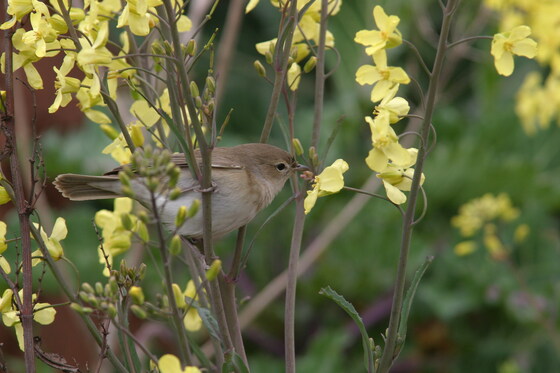
ENHG Lecture April 20: Quantum birds: The magnetic sense of night-migratory songbirds with Dr. Henrik Mouritsen
07:00 PM – 09:00 PM
Dear members: as usual, this lecture will take place over Zoom at 7:30 pm, and a link will be emailed to everyone registered beforehand. You are welcome to sign in as of 7:00 pm to meet fellow members. Looking forward to seeing you there!
About the Lecture: Migratory birds can use a magnetic compass to find their way, but how do they sense the reference direction provided by the geomagnetic field? In the past years, evidence has mounted that migratory birds use a light-dependent, radical pair-based mechanism to sense the axis of the geomagnetic field lines (for a review, see Nature 558, 50-59). Recently, we showed that the magnetic compass of night-migratory birds is sensitive to anthropogenic electromagnetic field disturbances being ca. 1000 times weaker than the current WHO guideline limits (Nature 509, 353-356). This result could be significant in relation to migratory bird conservation measures and strongly indicates that the basic sensory mechanism underlying the magnetic compass of night-migratory songbirds should be based on quantum mechanical principles rather than classical physics. Neuroanatomical data have shown that magnetic compass information is detected in the eye and then processed in a small part of the so-called thalamofugal visual pathway terminating in the visual processing centre “Cluster N”. When Cluster N is deactivated, migratory European Robins can no longer use their magnetic compass, whereas their star compass and sun compass abilities are unaffected (Nature 461, 1274-1277). Thus, we are starting to get an understanding of how magnetic compass sensing works in migratory birds. Very recently, we have been able to show that a specific molecule from night-migratory birds is indeed magnetically sensitive based on a readical-pair mechanism (Nature, in press). In my talk, I will bring all this information together and present how night-migratory songbirds sense and use magnetic information to navigate with exquisite precision over thousands of kilometres.
Henrik Mouritsen: Henrik Mouritsen is a full professor of Neurosensory sciences at the University of Oldenburg. The long-distance navigational abilities of animals have fascinated humans for centuries and challenged scientists for decades. How does a migratory bird with a brain weighing less than 1 gram circumnavigate the globe with a precision unobtainable by human navigators before the emergence of GPS satellites? To answer these questions, multi-disciplinary approaches are needed. My group and its collaborators use mathematical modelling, physics, quantum chemistry, molecular biology, neurobiology, histology, computer simulations and newly developed laboratory equipment in combination with behavioral experiments and analyses of field data to achieve a better understanding of the behavioral and physiological mechanisms of long distance navigation in birds. In recent years, our main focus has been on unravelling the mechanisms underlying the magnetic senses in birds.
Apr
06
2021
Past Event
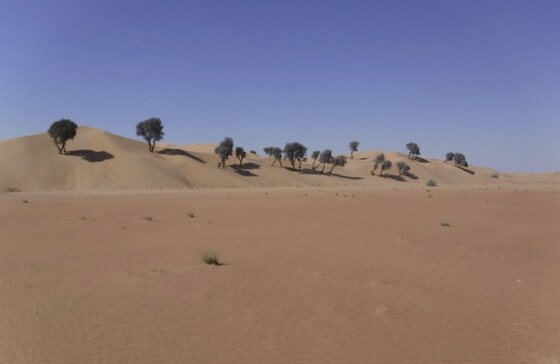
ENHG Lecture: Late Glacial and Holocene Palaeoenvironments of Southeast Arabia, by Adrian Parker
07:00 PM – 09:00 PM
About the Speaker: Adrian Parker is Professor of Geography at Oxford Brookes University where he leads the Human Origins and Palaeoenvironments (HOPE) Research Group. Adrian’s work lies at the interface between archaeology and geography/earth sciences. He has undertaken field research in the UAE for 25 years and published widely on past climates, environmental change and landscape responses from geoarchives, including dunes, palaeo lakes/wetlands and fluvial/alluvial systems. He has a particular interest in past human-environment interactions from this climatologically dynamic region.
About the Talk: Arabia is located at the interface between the mid-latitude Westerlies and the Indian and African Monsoons, which are arguably the most dynamic climate systems on the planet. During the Quaternary (last 2.6 million years), the climate of Arabia has alternated between phases of aridity and wetter periods largely in line with major global glacial and interglacial cycles. Our current interglacial, the Holocene (last 11,600 years), has seen major transformations of the landscape of southeast Arabia in response to changes in climate and in particular water availability. The Late Glacial and Holocene landscapes (last 20,000 years) of southeast Arabia will be explored through a variety of geoarchives including dunes, lake/wetland records and fluvial systems. These records are used to reconstruct past environmental changes across the region and examine the driving mechanisms behind and landscape responses to these. The link between landscape and climate has been pivotal for human-environment relationships over millennia in this region. Inferences linking climate related societal changes and adaptation through the regional archaeological record will be discussed.
Mar
23
2021
Past Event
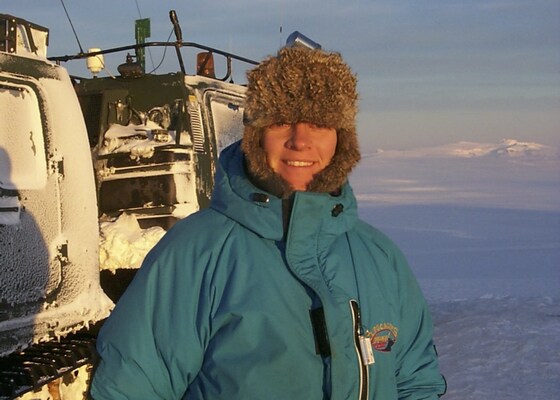
ENHG Lecture: Global Impact of Glacier Change in Iceland, with Dr. Gudfinna Adalgeirsdottir
07:00 PM – 09:00 PM
Dear members: we understand there have been some technical difficulties; thank you for being patient with us as we work through them. This lecture will take place on Zoom, as usual, starting at 7 pm for informal chats with members, and then beginning in earnest at 7:30. See you then!
About the talk:
Glaciers in Iceland are responding to climate change, like all glaciers in the world. As the temperature rises due to anthropogenic climate change, the glaciers adjust to the warmer climate by reducing their sizes. In Iceland, 10% of the land is covered by glaciers, and the largest glacier in Europe, Vatnajökull, is located on the south east coast, where high precipitation amount maintains its size. There are 4 large ice caps (>500 km2), 7 smaller (>10 km2) and about 250 small glaciers in Iceland with total volume about 3,400 km3 (in 2019). If evenly spread over Iceland, the ice would be a 35 m thick layer, which corresponds to about 9 mm of potential global sea level rise. The glaciers in Iceland have reduced by 16 ± 4 % since ~1890, when they were at the maximum extent at the end of the Little Ice Age. Almost half of the total mass loss occurred in the period 1995-2019. Similar reduction of glacier mass is observed in all glacier-covered regions in the world. In this talk ,the glacier loss in Iceland is put into global context and projections for the future of the glaciers discussed in the light of the Paris agreement and our task of reducing global emissions of greenhouse gases.
About the speaker:
Guðfinna Aðalgeirsdóttir is professor of Geophysics at the Institute of Earth Sciences, University of Iceland. Her work focuses on the interaction of climate and glaciers by monitoring and modelling the response of glaciers to climate change in the past, present and future. She previously worked on coupling ice sheet and climate models for the Greenland Ice Sheet at the Danish Meteorological Institute in Copenhagen, in order to improve sea level rise projections. She studied geophysics and glaciology at University of Iceland, University of Alaska in Fairbanks and ETH in Zürich, Switzerland and has done field work in Iceland, Alaska, Switzerland, Greenland and two field seasons in Antarctica. Guðfinna is one of the lead authors of the upcoming 6th assessment report of the Intergovernmental Panel on Climate Change (IPCC AR6).
